
Complexity Is the Enemy of Growth: A Practical Guide to Simplifying Operations
Discover why operational complexity silently kills business growth and how simplifying processes, structures, and systems can unlock scalability across African markets.

Topics
Company registration, licensing, formation, permits, and legal structures for starting a business in Africa.
All Insights
Discover why operational complexity silently kills business growth and how simplifying processes, structures, and systems can unlock scalability across African markets.

A practical guide to building a B2B sales playbook that respects the diversity of African markets while maintaining consistency, repeatability, and scalability across your sales team.
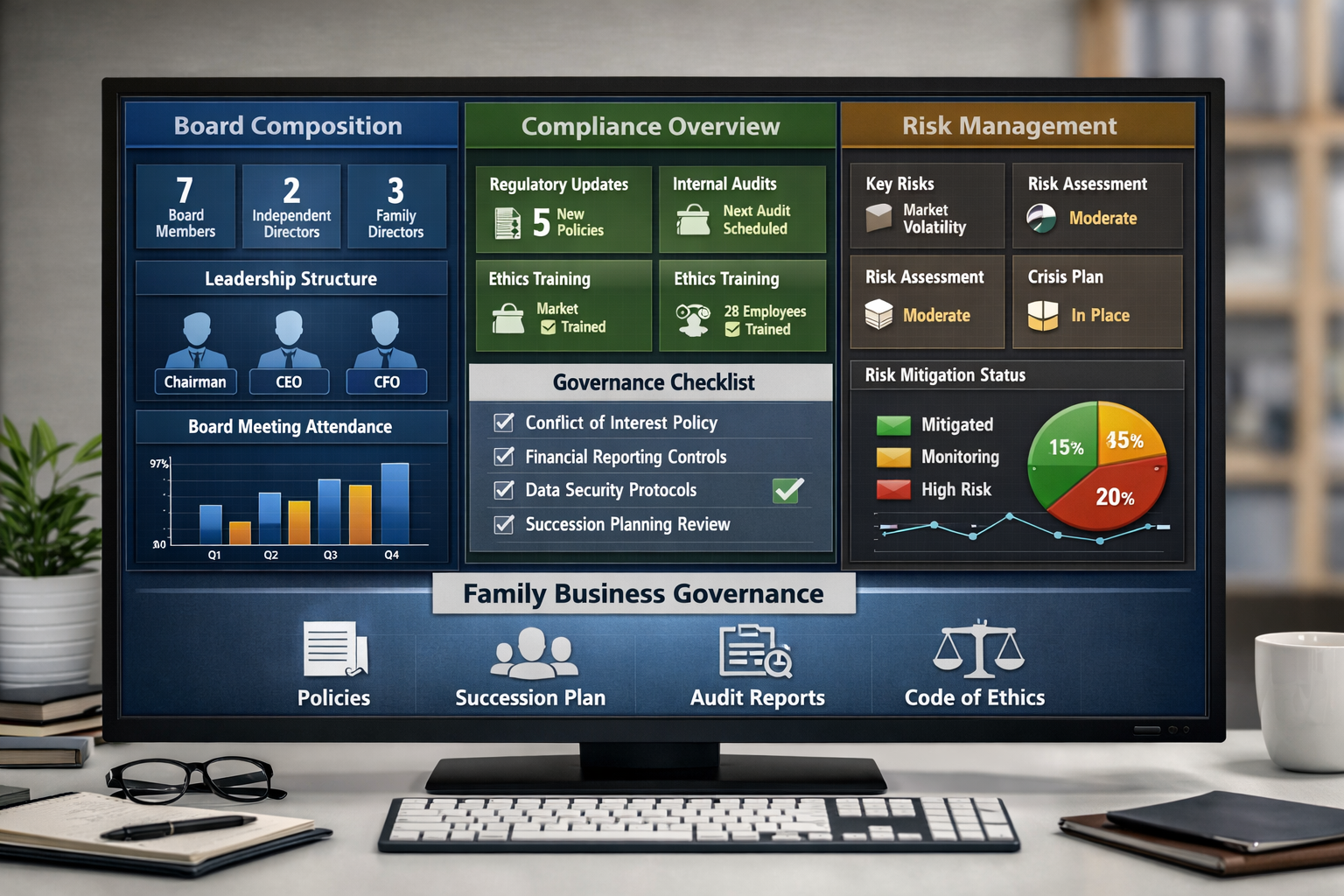
Discover why African family businesses must separate family identity from business identity to improve governance, scalability, and long-term sustainability.
Learn why governance is essential before scaling family businesses in Africa and how strong structures improve continuity, accountability, and growth.
Learn why African family businesses must transition from ownership-focused leadership to stewardship-driven governance for long-term sustainability.
Learn why operational complexity slows growth in African businesses and how simplifying systems improves scalability and profitability.
Learn how operational intelligence helps businesses improve efficiency, decision-making, and competitiveness through real-time insights.
Discover how African businesses can use data-driven decision-making to improve strategy, efficiency, and long-term competitiveness.
Across Africa, too many organizations rise and fall with one extraordinary leader. But lasting success depends on leadership systems – not leadership personality. Here is how to build them.
In many African markets, what happens outside official channels often matters more than what happens inside them. Here is how informal power structures create hidden risks, and how businesses can navigate them.
In Southern African retail, the oldest debate is margin versus volume. But currency crashes, load shedding, and shifting consumer behaviour have changed the rules. Here is how to choose the right strategy – and when to switch.
Africa has no shortage of successful businesses. What it lacks are enduring institutions that outlast their founders. Here is why institutional thinking is the next frontier for African enterprise.
Most African businesses blame the economy when revenue stalls. But the real issue is closer to home. Discover why your business model – not the market – is the real barrier to growth.
Learn how to build a revenue architecture that lets your sales system operate dependably without you. Design processes, metrics, and coaching loops that scale revenue beyond the founder.
Is your business too dependent on you? Learn how to transition from founder-led chaos to scalable, process-driven operations, without destroying the innovation that made you successful. A practical framework for growth.
Limited access to reliable electricity, not regulation or taxes, is the biggest barrier to doing business in Africa. Here’s how power costs are reshaping strategy in 2026.
A skilled company secretary is critical for Pan-African businesses. Learn why multi-jurisdiction expertise is essential for compliance, governance, and growth.
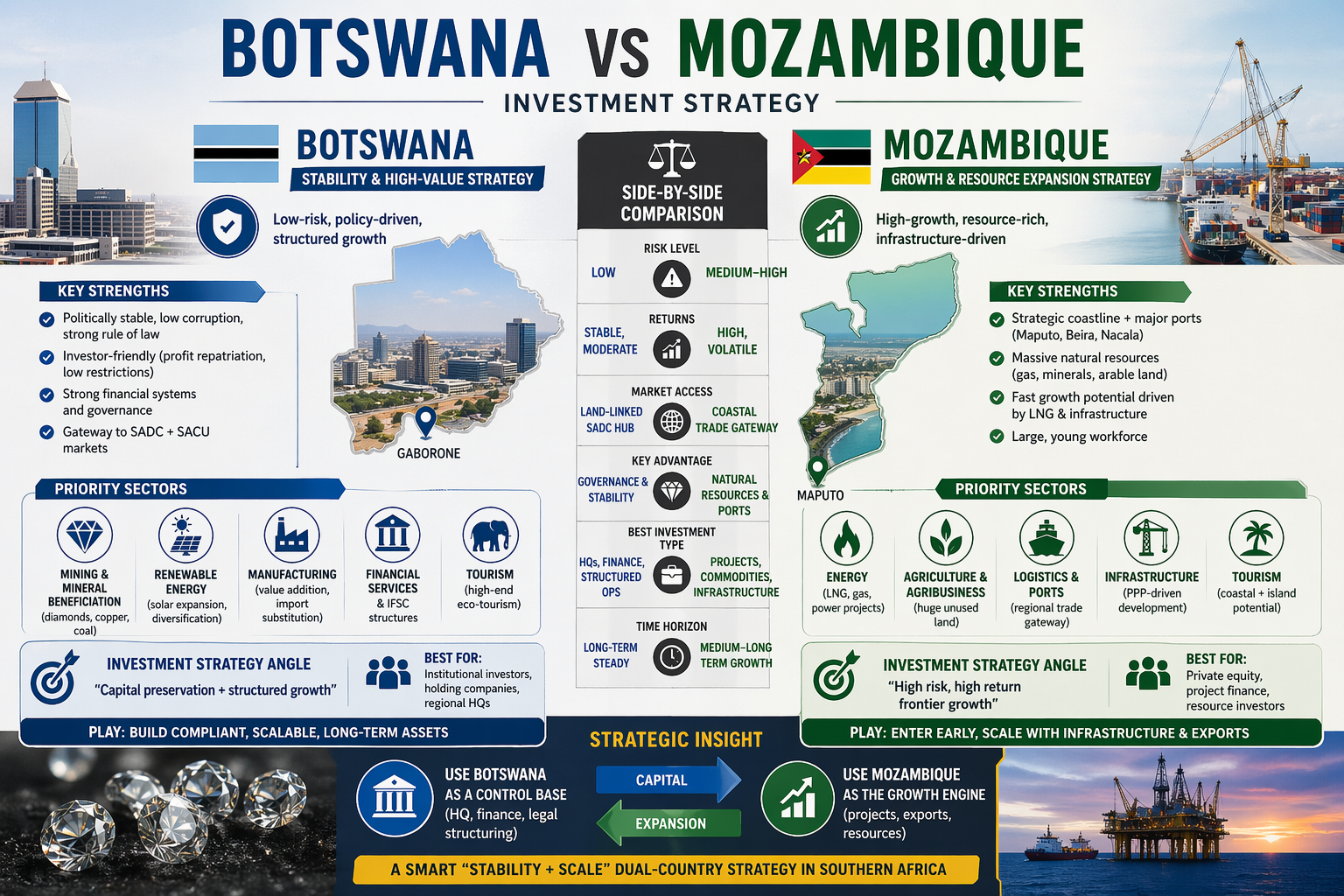
Botswana and Mozambique offer contrasting investment environments despite being in the same region. This article explores how tax, risk, and stability shape investor decisions in Southern Africa.
A complete diaspora guide to mergers and acquisitions in Africa. Learn deal trends, valuation, due diligence, and regulatory approvals for buying businesses.
Discover how resident directors and company secretaries in Africa are evolving under new laws, risks, and governance demands in 2026.
Learn how to run legally compliant cross-border board meetings in Africa, covering notice, quorum, virtual rules, and multi-country governance risks.
The market didn't work. The strategy shifted. The local partner moved on. Now you just want to close the subsidiary and walk away. But in Africa, you cannot simply switch off the lights and stop filing returns. That choice transforms a dormant company into a ticking legal bomb. Here is the right way to exit.
You are running operations in Lagos, Lusaka, and Nairobi. Each country has its own registry, its own tax authority, and its own unforgiving deadlines. One missed filing can freeze a bank account, block a tender, or trigger daily penalties that compound into a crisis. This is your month-by-month roadmap to staying compliant across Africa in 2026.
Introduction The Democratic Republic of Congo (DRC) offers vast investment opportunities in mining, agriculture, energy, and infrastructure. Two cities stand out as the nation’s economic powerhouses:
Introduction Starting a business in the Democratic Republic of Congo (DRC) requires more than just a good idea — it demands the right legal foundation. One of the most critical decisions every entrepr
Introduction The Democratic Republic of Congo (DRC) is fast becoming one of Africa’s emerging business destinations, thanks to its rich natural resources, growing market, and strategic location in Cen
d. Pro-Business Environment The Namibian government promotes private investment through streamlined registration processes, investor protections, and sectoral incentives. 2. Key Sectors for Investment
Introduction Namibia’s growing economy and strategic location in Southern Africa make it an ideal place to start a logistics company. From freight forwarding and warehousing to cross-border transporta
Setting up a pharmacy company in Zimbabwe is an exciting venture, but it comes with specific legal, regulatory, and procedural requirements. This article provides a detailed guide to help you navigate
Zimbabwe is an attractive destination for foreign investors, offering opportunities across sectors such as mining, agriculture, and manufacturing. However, establishing a business in Zimbabwe requires
Introduction“Did you know Botswana ranks among Africa’s top economies for ease of doing business, thanks to streamlined regulations and investor-friendly policies?” According to the World Bank’s Ease