
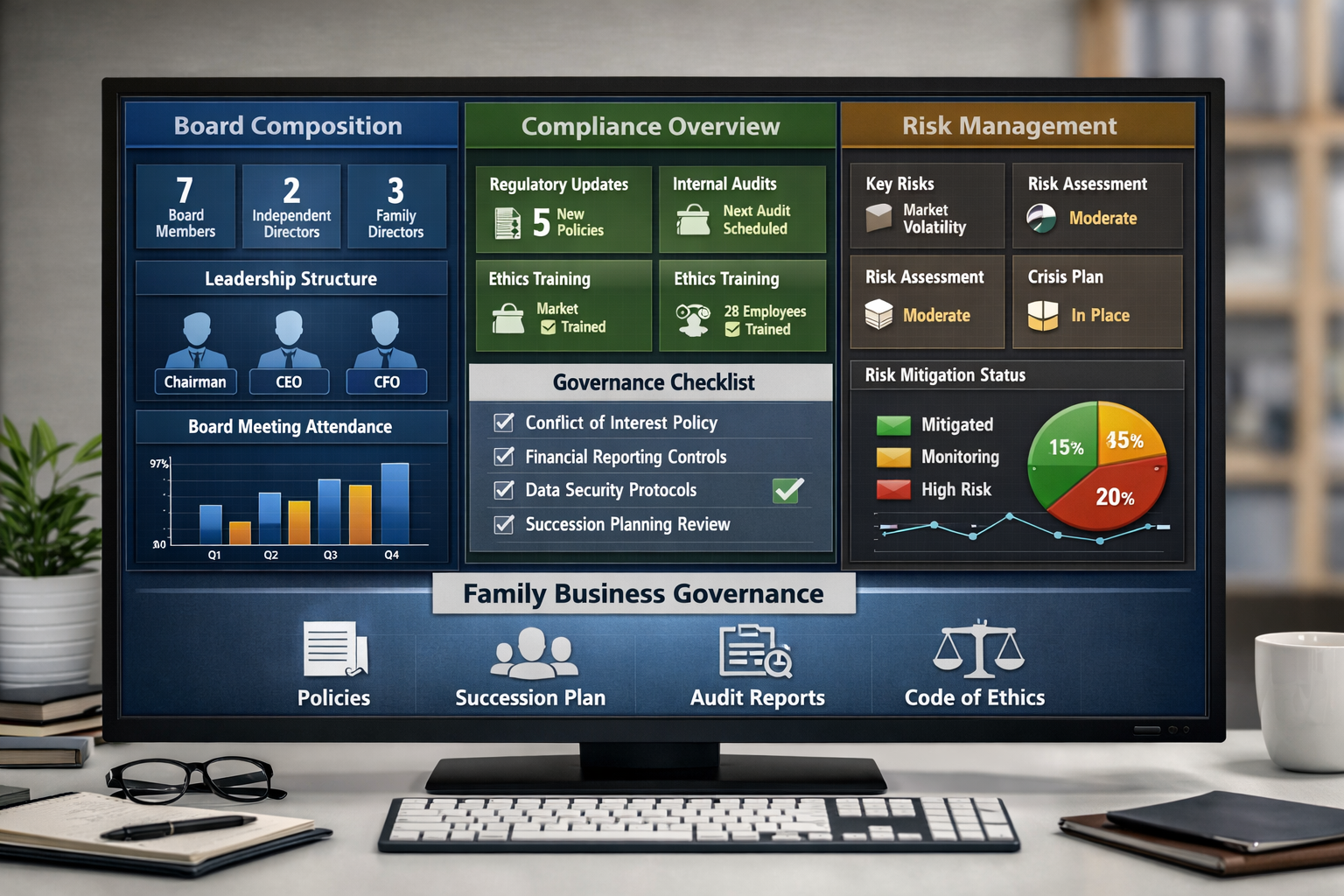
Many African family businesses prioritize growth long before establishing governance structures.
In the early stages of entrepreneurship, this often appears reasonable.
Founder-led businesses frequently grow through:
- speed,
- instinct,
- relationships,
- and centralized decision-making.
During initial growth phases, formal governance may seem unnecessary.
However, as businesses expand:
- operational complexity increases,
- family involvement grows,
- financial risk rises,
- and leadership transitions become more difficult.
At this stage, governance becomes critically important.
One of the biggest mistake’s family enterprises make is attempting to scale aggressively before building:
- accountability systems,
- leadership structures,
- reporting discipline,
- and operational controls.
Without governance, growth often creates instability rather than sustainability.
Across Africa, many promising family businesses struggle because:
- operational authority is unclear,
- succession planning is weak,
- financial oversight is inconsistent,
- and family relationships interfere with business decisions.
Governance helps businesses transition from:
- personality-driven operations to
- institution-driven enterprises.
This transition is essential for long-term continuity.
What Governance Really Means
Governance is often misunderstood.
Some business owners assume governance only applies to:
- large corporations,
- listed companies,
- or multinational organizations.
In reality, governance simply refers to the systems and structures that guide:
- decision-making,
- accountability,
- oversight,
- and organizational control.
Good governance helps businesses answer critical questions such as:
- Who makes strategic decisions?
- Who approves major expenditures?
- How is performance measured?
- How are disputes resolved?
- What happens during succession?
- How is accountability maintained?
Without governance clarity, businesses often become operationally fragile.
Why Family Businesses Delay Governance
Many African family enterprises postpone governance development because:
- founders prefer centralized authority,
- businesses operate informally,
- family trust replaces formal structures,
- or governance feels overly corporate.
Some founders worry governance may:
- reduce flexibility,
- slow decision-making,
- or weaken family control.
However, lack of governance eventually creates far greater operational risk.
As businesses scale, informal management structures become increasingly unsustainable.
Growth Magnifies Weaknesses
Small businesses can sometimes survive despite weak systems.
Larger businesses cannot.
As organizations expand:
- workforce size increases,
- financial exposure grows,
- operational coordination becomes harder,
- and leadership complexity rises.
Weak governance eventually produces:
- internal conflict,
- operational confusion,
- inconsistent decision-making,
- and accountability breakdowns.
Growth magnifies whatever already exists inside the organization.
Businesses with weak structures often experience greater instability during expansion.
Family and Business Roles Must Be Separated
One major governance challenge in family enterprises is role confusion.
Family relationships and business responsibilities frequently overlap.
Without governance clarity:
- emotional dynamics affect operational decisions,
- authority becomes inconsistent,
- and accountability weakens.
Governance helps separate:
- ownership,
- management,
- and family influence.
This improves professionalism while preserving family participation.
Succession Requires Governance
Succession is one of the biggest risks facing African family businesses.
Many enterprises lack:
- succession plans,
- leadership transition frameworks,
- or defined ownership structures.
Without governance, leadership transitions often trigger:
- family disputes,
- operational instability,
- employee uncertainty,
- and strategic confusion.
Strong governance structures improve continuity during generational change.
Governance Improves Investor Confidence
Institutional investors increasingly evaluate governance quality before investing.
Private equity firms, lenders, and development finance institutions assess:
- financial oversight,
- reporting structures,
- board effectiveness,
- and operational accountability.
Businesses with weak governance often appear high-risk.
Strong governance improves:
- transparency,
- operational credibility,
- and financing potential.
Boards and Advisory Structures Matter
Family businesses do not necessarily require overly complex governance structures immediately.
However, even growing mid-sized enterprises benefit from:
- advisory boards,
- independent expertise,
- and structured oversight mechanisms.
External perspectives improve:
- strategic discipline,
- risk management,
- and operational accountability.
Strong boards also reduce excessive dependency on founders.
Governance Supports Professionalization
As businesses scale, professional management becomes increasingly important.
Governance structures help organizations:
- define leadership roles,
- standardize reporting,
- improve accountability,
- and reduce operational ambiguity.
This supports smoother integration of:
- professional executives,
- operational managers,
- and external specialists.
Professionalization becomes much easier when governance already exists.
Financial Governance Is Critical
Many family businesses experience problems because financial controls remain informal.
Weak financial governance may involve:
- unclear expense approvals,
- undocumented withdrawals,
- inconsistent reporting,
- or poor cash flow oversight.
As organizations grow, these weaknesses become dangerous.
Financial governance improves:
- reporting accuracy,
- operational transparency,
- and long-term sustainability.
Governance Protects Family Relationships
Ironically, governance often strengthens family unity rather than weakening it.
Clear structures reduce:
- misunderstandings,
- emotional conflict,
- and operational disputes.
Governance creates agreed frameworks for:
- ownership,
- leadership,
- compensation,
- and succession.
This reduces uncertainty and improves long-term stability.
Technology Strengthens Governance
Modern governance increasingly depends on operational visibility.
ERP systems and integrated reporting platforms improve:
- financial oversight,
- audit readiness,
- operational transparency,
- and accountability.
Businesses relying heavily on manual systems often struggle with:
- inconsistent reporting,
- delayed visibility,
- and weak internal controls.
Technology supports governance by institutionalizing operational information.
Governance Enables Sustainable Growth
Many founder-led businesses achieve impressive early success through entrepreneurial energy.
However, sustainable long-term scaling requires:
- systems,
- controls,
- reporting structures,
- and leadership discipline.
Governance creates the institutional foundation needed for:
- expansion,
- succession,
- investor confidence,
- and operational resilience.
Without governance, growth often becomes unstable.
Governance Is Not Bureaucracy
Some entrepreneurs resist governance because they associate it with unnecessary bureaucracy.
However, effective governance should improve:
- clarity,
- efficiency,
- accountability,
- and strategic alignment.
Good governance simplifies decision-making by creating:
- defined authority,
- measurable accountability,
- and operational consistency.
It strengthens agility rather than weakening it.
Conclusion
Family enterprises across Africa are entering a period of increasing operational complexity.
As businesses scale across generations, governance becomes essential for:
- continuity,
- professionalism,
- investor confidence,
- and long-term sustainability.
Businesses that prioritize governance before aggressive expansion are often better positioned to:
- manage succession,
- reduce operational risk,
- strengthen accountability,
- and scale sustainably.
The future of African family enterprises will increasingly belong to organizations that successfully combine:
- entrepreneurial energy,
- governance discipline,
- and institutional leadership.
Call to Action
Family businesses should evaluate whether their organizations have:
- clear governance structures,
- accountability systems,
- succession planning frameworks,
- and operational reporting discipline.
Businesses that strengthen governance early will likely improve long-term resilience, scalability, and generational continuity.