
Introduction
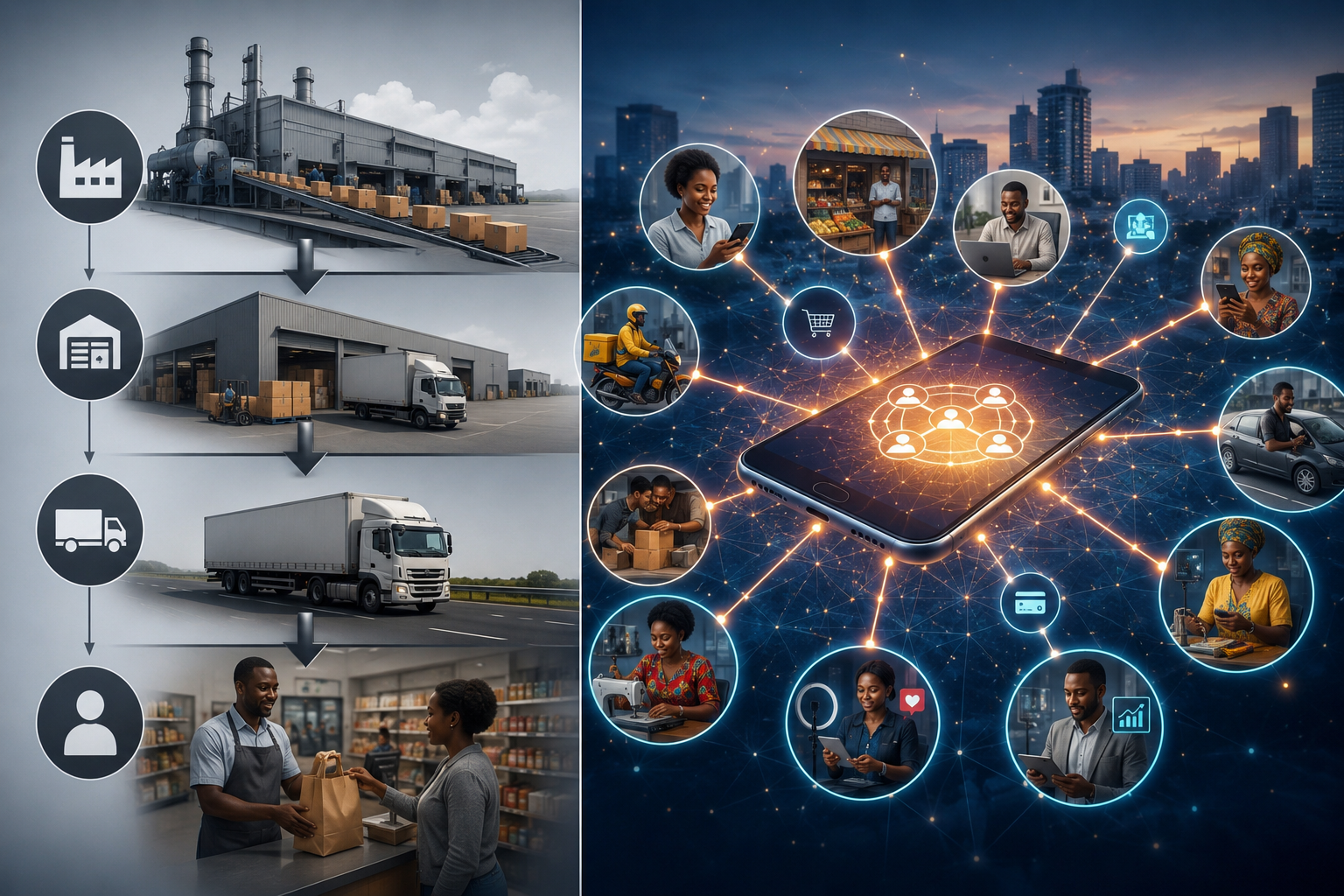
Traditional businesses have historically operated using linear models. A company produces a product or service, sells it to customers, and earns revenue through direct transactions. This approach has shaped industries for decades and continues to dominate many sectors across Africa.
However, digital transformation is changing how value is created and distributed. Increasingly, some of the world’s fastest-growing companies are not simply producing products themselves. Instead, they are building platforms that connect users, businesses, suppliers, and service providers within larger ecosystems.
This shift toward platform thinking is influencing industries ranging from finance and transport to agriculture, retail, logistics, and education.
For African businesses navigating rapid technological and economic change, understanding the difference between platform and linear business models is becoming increasingly important for long-term competitiveness.
Understanding Linear Business Models
Linear businesses operate through a straightforward value chain.
The process generally involves:
- Producing goods or services
- Marketing products to customers
- Generating revenue from sales
Growth in linear businesses usually depends on increasing production capacity, expanding sales teams, or opening additional locations.
Traditional manufacturing companies, wholesalers, and retailers often follow this structure.
While effective, linear models can face scalability limitations because growth usually requires proportional increases in operational resources.
What Is Platform Thinking?
Platform businesses operate differently.
Instead of owning and controlling every part of production, platforms create systems that allow multiple participants to interact and exchange value.
Platforms may connect:
- Buyers and sellers
- Drivers and passengers
- Merchants and customers
- Businesses and service providers
The platform itself becomes the infrastructure that enables transactions and interactions within an ecosystem.
This approach changes how businesses scale and compete.
Why Platform Models Scale Faster
One of the biggest advantages of platform businesses is scalability.
As more users join the platform:
- Network effects increase value
- User engagement grows
- Market reach expands
- Revenue opportunities multiply
Unlike linear businesses, platforms can often grow rapidly without proportionally increasing physical infrastructure.
This scalability is one reason platform-based companies have become dominant globally.
African Businesses and the Platform Opportunity
Africa’s growing digital economy is creating significant opportunities for platform-based business models.
Increasing smartphone adoption, mobile money penetration, and internet connectivity are supporting platform growth across sectors such as:
- Financial technology
- E-commerce
- Transport and logistics
- Agriculture marketplaces
African consumers and businesses are increasingly comfortable interacting digitally, creating opportunities for ecosystem-based business models.
Platform Models Create Ecosystems
Platform businesses often succeed because they build ecosystems rather than simply selling products.
Strong ecosystems encourage:
- Customer retention
- Partner collaboration
- Data generation
- Continuous engagement
This creates stronger long-term competitive positioning.
Businesses operating ecosystem models often become central market infrastructure providers rather than ordinary service companies.
Data and Network Effects
Data is a major advantage for platform businesses.
Platforms generate insights from:
- Customer interactions
- Transaction behavior
- Market demand trends
- Operational performance
As platforms grow, the value of their data often increases significantly.
This information can improve service delivery, personalization, pricing strategies, and operational efficiency.
Challenges of Building Platforms
Despite their advantages, platform businesses also face major challenges.
Common difficulties include:
- High technology investment costs
- Building initial user networks
- Regulatory complexity
- Cybersecurity risks
Platforms often require significant upfront investment before reaching profitability.
Businesses must also maintain trust and operational reliability as ecosystems expand.
Can Traditional Businesses Transition?
Many traditional businesses are beginning to integrate platform thinking into existing operations.
Examples may include:
- Retailers creating online marketplaces
- Logistics firms building digital freight networks
- Financial institutions developing digital ecosystems
Businesses do not always need to abandon linear operations completely. Instead, they can combine traditional strengths with digital ecosystem strategies.
The Competitive Future
Platform thinking is likely to become increasingly important across African markets.
Businesses capable of building connected ecosystems may gain advantages through:
- Stronger customer engagement
- Better scalability
- Data-driven operations
- Expanded regional reach
As digital infrastructure improves across Africa, platform-based competition is expected to accelerate further.
Final Thoughts
Platform business models are reshaping how value is created, distributed, and scaled in modern economies. While linear businesses remain important, companies that embrace ecosystem thinking and digital connectivity are increasingly positioned for long-term growth.
For African businesses, the future may depend not only on what they sell, but on how effectively they connect markets, customers, and services through scalable digital ecosystems.
Call to Action
Businesses should evaluate how platform strategies, digital ecosystems, and network-based growth models can strengthen competitiveness and unlock new revenue opportunities.