
Introduction
Africa is full of successful businesses. Family-owned trading houses. Thriving retail chains. Innovative tech start-ups. Profitable manufacturers.
But Africa has very few enduring institutions, organizations that outlast their founders, survive leadership transitions, and continue creating value across generations.
This is not a minor distinction. It is the difference between wealth that lasts and wealth that evaporates. Between a company that sells to the highest bidder when the founder retires, and a company that grows stronger with each new CEO.
Across the continent, too many entrepreneurs build monuments to themselves rather than institutions for the long term. The business is inseparable from the founder. Decisions cannot be made without them. Key relationships leave when they leave. And when the founder steps aside, the business steps into crisis.
This article argues that the next phase of African economic development depends on a shift: from building businesses to building institutions.
What Is an Institution – and How Is It Different from a Business?
A business is a vehicle for generating profit. An institution is a durable organization with systems, values, and governance that outlast any individual.
Key differences between a typical business and an enduring institution:
- Decision-making: A typical business relies on the founder for every major decision. An institution has delegated authority and clear processes.
- Knowledge management: In a typical business, key knowledge lives only in the founder’s head. An institution documents knowledge and makes it transferable.
- Succession planning: A typical business treats succession as an afterthought (or a crisis). An institution plans succession years in advance.
- Culture: A typical business has a personality‑driven culture. An institution embeds culture in systems, values, and shared practices.
- Longevity: A typical business often ends when the founder retires or sells. An institution endures across generations of leadership.
In the African context, institutional thinking is still rare. But the most valuable companies on the continent, from Standard Bank to MTN to Equity Group – became valuable precisely because they made the transition from personal business to lasting institution.
Why Africa Needs Institutions, Not Just Businesses
The continent’s economic history is littered with once‑great companies that collapsed when their founder died, became ill, or lost political favour.
The cost of not building institutions:
- Intergenerational wealth is lost within one generation.
- Employees lose livelihoods when a single leader departs.
- Credible partners (international investors, development finance institutions) hesitate to commit capital to personality‑driven firms.
- Economic growth becomes fragile, dependent on a handful of irreplaceable individuals.
What institutions make possible:
- Long‑term investment: Institutions can outlast political cycles and economic downturns.
- Professional careers: Talented Africans can build 30‑year careers inside a single organization, not hop from start up to start up.
- Trust: A well‑governed institution is a counterparty that banks, suppliers, and customers can rely on.
- Legacy: Founders can retire with dignity, knowing what they built will continue.
The Barriers to Institution Building in Africa
If institutions are so valuable, why are they so rare across the continent?
Barrier 1 – Founder‑centric culture
- Many African entrepreneurs built their businesses from nothing, often against enormous odds.
- They trust themselves more than any system or successor.
- Letting go feels like losing control, or risking everything they built.
Barrier 2 – Weak professional management class
- Professional CEO talent exists, but it is scarce and expensive.
- Many founders fear hiring outsiders who will not understand local context or family dynamics.
- The result: family members promoted beyond competence, or no succession at all.
Barrier 3 – Informal governance as default
- Many businesses operate on trust, handshakes, and personal relationships.
- Formal boards, audited accounts, and documented policies feel like unnecessary overhead, until a crisis proves otherwise.
Barrier 4 – Short‑term survival mindset
- When you are fighting currency devaluation, load shedding, and unpredictable regulation, long‑term institution building feels like a luxury.
- The urgent always eats the important.
Barrier 5 – Succession taboos
- In many cultures, discussing death, retirement, or incapacity is deeply uncomfortable.
- Founders delay succession planning until it is too late, often leaving a vacuum filled by conflict.
How to Start Building an Institution – Practical Steps
Transitioning from a founder‑driven business to a lasting institution is not easy. But it is possible. Here is how to begin.
1. Separate Ownership from Management
- Hire a competent CEO who is not a family member.
- Give that CEO real authority over operations, hiring, and budget.
- Move the founder to a board role (or chairman emeritus) with defined responsibilities, not daily interference.
2. Formalize Governance
- Establish a board of directors that includes independent, non‑family members.
- Hold regular board meetings with written minutes and action items.
- Create committees for audit, remuneration, and succession.
3. Document Everything
- Write down standard operating procedures for every key function (sales, finance, HR, logistics).
- Create an employee handbook that applies equally to family and non‑family staff.
- Archive institutional memory, customer histories, supplier contracts, lessons from past failures.
4. Build a Professional Talent Pipeline
- Recruit mid‑level managers from outside the family.
- Invest in training and mentorship programmes that prepare internal candidates for leadership.
- Tie promotions to performance, not bloodline.
5. Plan Succession Early – and Update It Annually
- Identify at least two potential successors for every key leadership role (including the founder).
- Write a succession plan that covers sudden departure, planned retirement, and incapacity.
- Review the plan with the board every year, and adjust as people develop or leave.
6. Professionalize Financial Reporting
- Move from “accounts my cousin keeps in a notebook” to audited financial statements.
- Implement internal controls that separate authorization, payment, and reconciliation.
- Publish annual reports (even if not legally required) to build external trust.
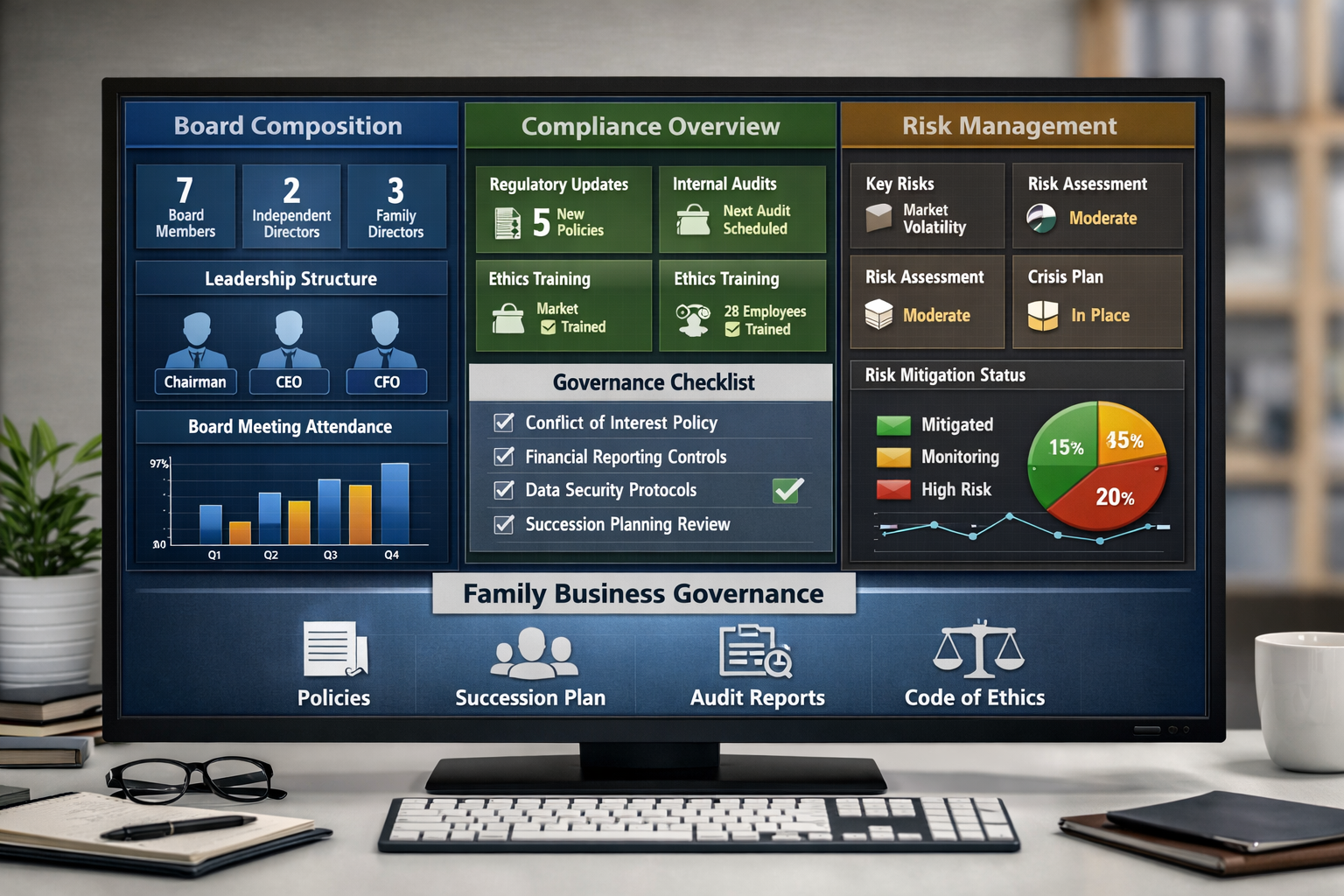
The Role of Family Businesses in Institution Building
Many of Africa’s largest companies are family‑owned. Family businesses can become institutions, but only if they manage the unique challenges of family dynamics.
What family businesses must do to become institutions:
- Create a family constitution that defines who can work in the business, how ownership is transferred, and how disputes are resolved.
- Distinguish between family shareholders (who own the business) and family employees (who work in it). Not every family member deserves a job.
- Establish a family council separate from the board of directors. The family council handles family matters; the board handles business matters.
- Allow non‑family executives to rise to the most senior roles. The best CEO may not share your surname.
Warning sign for family businesses: If the founder says, “My children will run this business someday, even if they are not qualified”, the business will likely not survive the second generation.
Conclusion: Build Something That Outlasts You
The greatest African entrepreneurs of the last generation built successful businesses. The greatest of the next generation will build enduring institutions.
- A business reflects its founder. An institution stands on its own.
- A business sells products. An institution builds systems.
- A business makes you rich. An institution creates lasting value for employees, customers, communities, and shareholders, long after you are gone.
The choice is not between profit and legacy. Properly built institutions deliver both. The question is whether you will start building today, or leave behind a monument that crumbles without you.
Call to Action
Take one concrete step toward institution building this quarter:
- If you have no board, recruit one independent director.
- If you have no written succession plan, draft a simple one-page version.
- If your key knowledge lives only in your head, document one critical process (e.g., how to renew a supplier contract, or how to onboard a new manager).
Then repeat. One step at a time. Building an institution is not a single project, it is a discipline. Start now, and what you build may outlive you.