
Africa is entering a new economic cycle that is drawing significant renewed investor attention, with sustained demand in energy and infrastructure and emerging opportunities in digital infrastructure, renewables, agritech and logistics. Yet this momentum unfolds within legal and regulatory environments that remain diverse and shaped by complex political contexts. The joint venture—a structure combining foreign capital and expertise with local access and legitimacy—has become the default vehicle for navigating these waters. But not all joint ventures are created equal, and the rules governing them shift dramatically depending on which sector you enter and which border you cross.
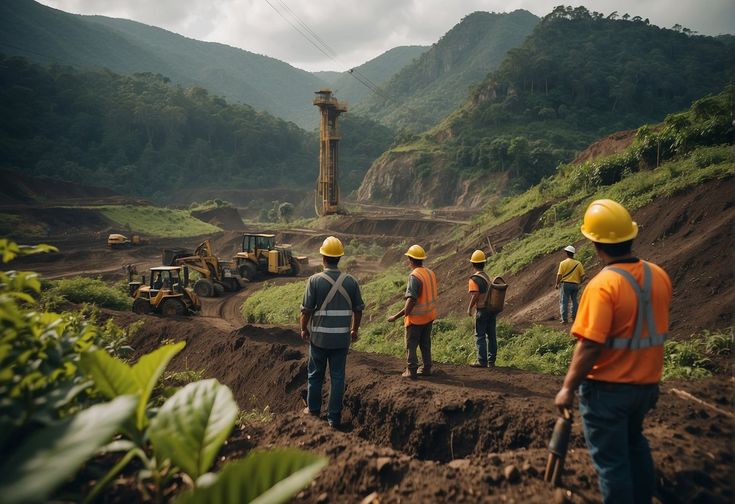
Nowhere is the joint venture more politically charged and legally intricate than in mining. Across the continent, governments have moved decisively to claim a direct ownership stake in the resources beneath their soil. Tanzania’s Mining Act entitles the government to a minimum 16 percent non-dilutable free carried interest in all mining projects, ensuring that the state participates directly in ownership. Zimbabwe has drawn a 26 percent line in the sand, requiring government equity in all greenfield mining projects through a state-owned vehicle. Burkina Faso’s 2024 Mining Code automatically grants the state a 15 percent free-carried interest, with an option to acquire up to 30 percent paid interest calculated on exploration and feasibility costs.
These are not negotiable requests; they are statutory entitlements. For the foreign investor, the challenge becomes one of financial engineering. Since the government contributes no capital but claims its full share of dividends, smart structuring demands creative use of shareholder loans and priority return waterfalls. Investors are increasingly pushing to exclude costly downstream assets like processing plants from the joint venture’s scope, ring-fencing the government’s interest to the narrowest possible asset base. The room for negotiation lies not in whether the state participates but in how the economic pain of that participation is distributed.
Beyond the headline equity grabs, local content requirements add another layer of mandatory partnership. Tanzania’s Local Content Regulations require a non-indigenous company providing goods or services to incorporate a joint venture with an indigenous Tanzanian company and grant at least 20 percent equity to the local partner. Zambia amended its Investment Act in 2022 to require mining projects to maintain at least 20 percent local shareholding. South Africa’s Mining Charter mandates 30 percent black ownership and escalating localization of management. Guinea demands that the state hold a minimum 15 percent free carry in large mining projects. These are not optional gestures toward corporate social responsibility. They are legal prerequisites for holding a license.
Agriculture presents a different set of structural imperatives. The central constraint across much of the continent is land. Ethiopia’s constitution declares all land state property; foreign investors cannot own it, only lease it for terms that have shrunk from 25 years to as little as 15 under recent policy shifts. Kenya’s Land Control Act flatly prohibits the sale, transfer, or lease of agricultural land to non-citizens unless specific presidential exemption is granted a hurdle few clear. Tanzania’s land regime similarly reserves ownership for citizens while offering foreigners renewable 99-year leases subject to stringent investment conditions.
The joint venture becomes not just a convenience but a necessity. By partnering with a local entity that holds secure land rights, the foreign investor gains operational access without running afoul of ownership restrictions. But this structure introduces its own risks. Oral promises made by local chiefs or regional officials carry no legal weight against the written record of the land registry. Disputes over benefit sharing, community displacement, and environmental degradation have derailed projects from Ethiopia’s coffee plantations to Zambia’s commercial farming blocks. The most successful agricultural joint ventures are those that embed dispute resolution mechanisms and community engagement protocols directly into the foundational agreements, treating local relationships as core assets rather than peripheral obligations.
The energy sector, particularly renewables and power generation, has emerged as the continent’s most dynamic joint venture arena. Here the model often shifts from simple private-private partnerships to complex public-private collaborations. Botswana’s approach to green energy investment illustrates the trend: a recent solar project saw Chinese and local partners form a consortium with government, operating under a 25-year concession where the private partners finance and build the asset, the government commits to purchasing the power, and ownership reverts to the state at the end of the term. Zambia’s acquisition of a 26 percent stake in Angola’s Lobito refinery signals a new model of intra-African energy cooperation, where neighbouring states become equity partners in shared infrastructure rather than passive fuel buyers.
The common thread across mining, agriculture, and energy is the rising expectation of host governments. Tender evaluations increasingly hinge on execution capability, integration of local content, and alignment with national development strategies—not merely the financial terms offered. ESG considerations have moved from aspirational policy goals to embedded procurement requirements. The investor who arrives offering only capital will find themselves outmaneuvered by competitors who bring technology transfer commitments, local supplier development programs, and credible community investment plans.
Several structural provisions consistently prove decisive in shaping joint venture outcomes. Shareholding and transfer clauses must clearly distinguish between internal group restructurings and genuine third-party sales; in Côte d’Ivoire and Cameroon, the absence of such distinctions has triggered assertions of termination rights following routine intra-group reorganizations. Foreign-exchange protections are essential in jurisdictions where central bank approvals are required, with contracts specifying currency of payment, reference rates, and contingency steps for convertibility constraints. Stabilization clauses, once broad and ambitious, have evolved toward targeted protections limited to fiscal and customs regimes, combined with tariff-adjustment mechanisms that are more politically sustainable.
Dispute resolution demands equal foresight. Arbitration remains the primary mechanism for resolving large commercial disputes in Africa, with most major contracts providing for international arbitration seated outside the host state. London and Geneva are favoured for their neutrality and predictable judicial oversight; Paris remains predominant for Francophone Africa. Yet the treaty landscape is shifting. Several African states have withdrawn from bilateral investment treaties or signalled intent to renegotiate them, even as the AfCFTA investment protocol moves toward more regional solutions. Investors can no longer assume that legacy treaty protections will remain available when disputes arise.
The Africa Trade Engine, a joint venture between TRT Manufacturing and Trade Depot, offers a glimpse of what well-structured collaboration can achieve. Launched to transform AfCFTA’s vision into operational reality, it establishes continent-wide manufacturing and logistics ecosystems designed to end Africa’s reliance on imports. The venture’s Localisation Africa Index tracks and rewards brands that commit to localizing manufacturing, sourcing, and distribution—creating a transparent benchmark for what truly qualifies as Made in Africa.
Conclusion
The choice of joint venture structure in Africa is not a one-size-fits-all proposition. Mining demands navigation of mandatory government equity and local content thresholds. Agriculture turns on land access and community consent. Energy requires alignment with long-term public infrastructure goals and sovereign offtake commitments. The investor who treats the joint venture as a mere vehicle for capital deployment will encounter resistance, delay, and potential loss. The investor who builds the joint venture as a true partnership—with clear governance, aligned incentives, and a credible plan for local value creation—will find that Africa’s resources, fields, and power grids remain among the world’s most compelling investment frontiers.


.jpg)